• Hey Guest. Check out your NeoGAF Wrapped 2025 results here!

First Herculaneum scroll read in full through machine learning after 2000 years

EviLore

Expansive Ellipses
Staff Member

QAbBa06YgGGSeQCY.jpeg


Article:
PHerc. 1667, sealed since the eruption of Vesuvius in 79 AD, has been virtually unwrapped and read from beginning to end.
June 25th, 2026
Read the preprint: Complete virtual unwrapping and reading of a rolled Herculaneum papyrus (PDF). The data is openly available at scrollprize.org/data, and the code on GitHub.

For almost 2,000 years, the carbonized library of Herculaneum has kept a cruel bargain: its scrolls survived the eruption of Mount Vesuvius, but only by becoming too fragile to open. To read one was to destroy it. Hundreds of rolls have therefore remained sealed, their contents preserved yet unreachable.

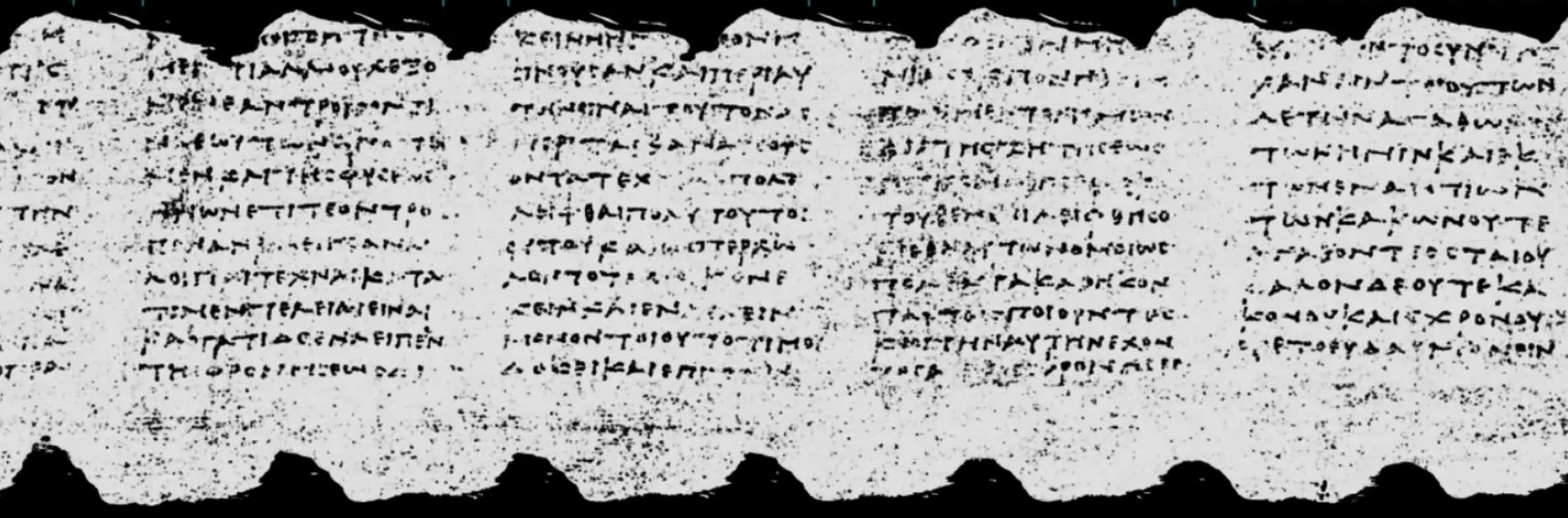
Today that changes. We have completely virtually unwrapped and read PHerc. 1667 — the scroll the Vesuvius Challenge community knows as Scroll 4 — without ever touching its pages. It is the first Herculaneum papyrus to be digitally unrolled and read in full, end to end, and made available for sustained scholarly study.

From a sealed lump to a readable book

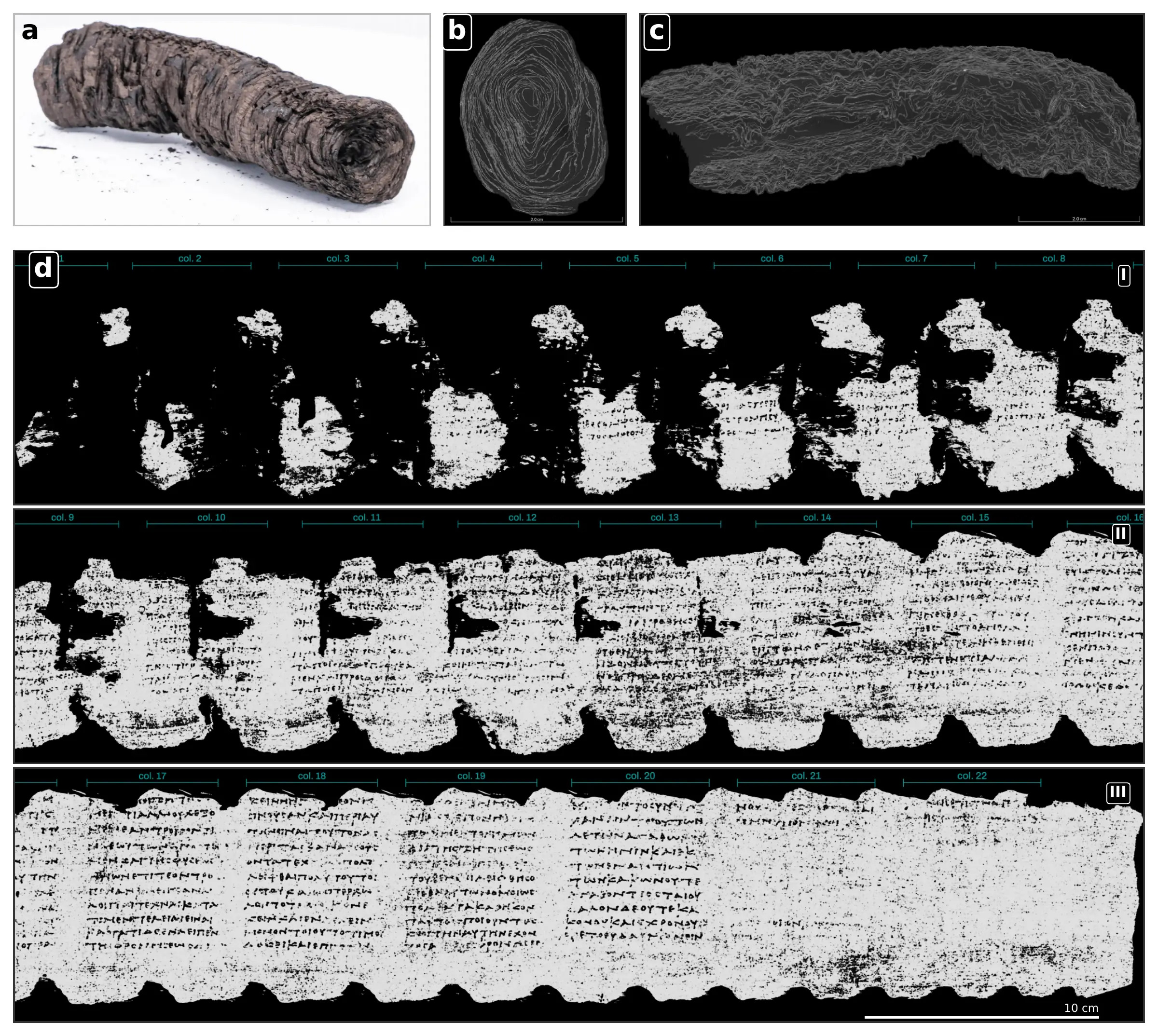
PHerc. 1667 began as a blackened, rolled mass of carbonized papyrus. To read it, we never unrolled it physically. Instead, we scanned it with high-resolution X-rays, reconstructed the wound sheet inside the volume, flattened it into a readable surface, and used machine learning to bring out the faint traces of ancient ink.

Three sealed scrolls, three milestones

The work reaches beyond a single scroll. Alongside the complete reading of PHerc. 1667, the research establishes a method that holds up under independent checks and scales to other rolls.

PHerc. 1667 — read in full

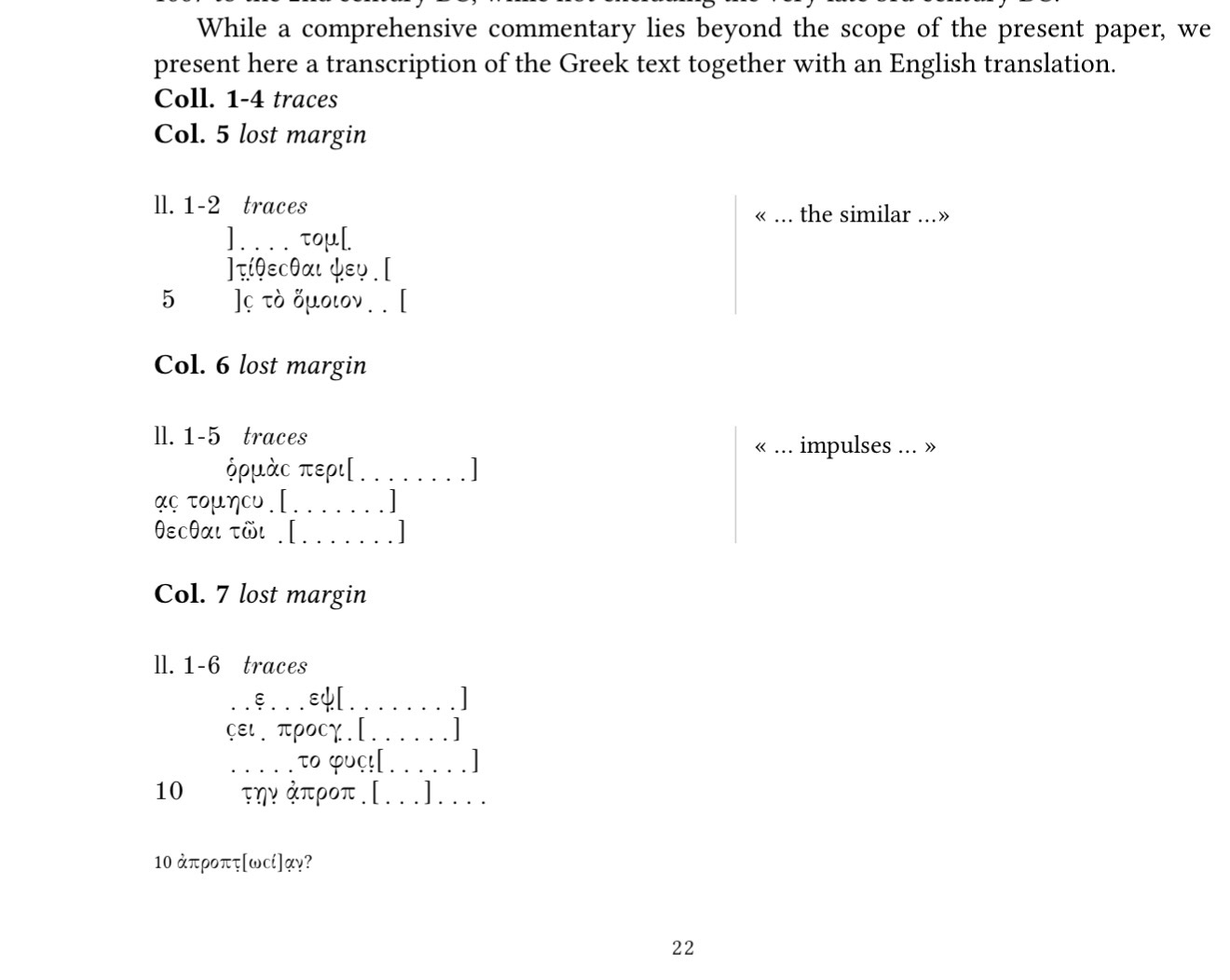
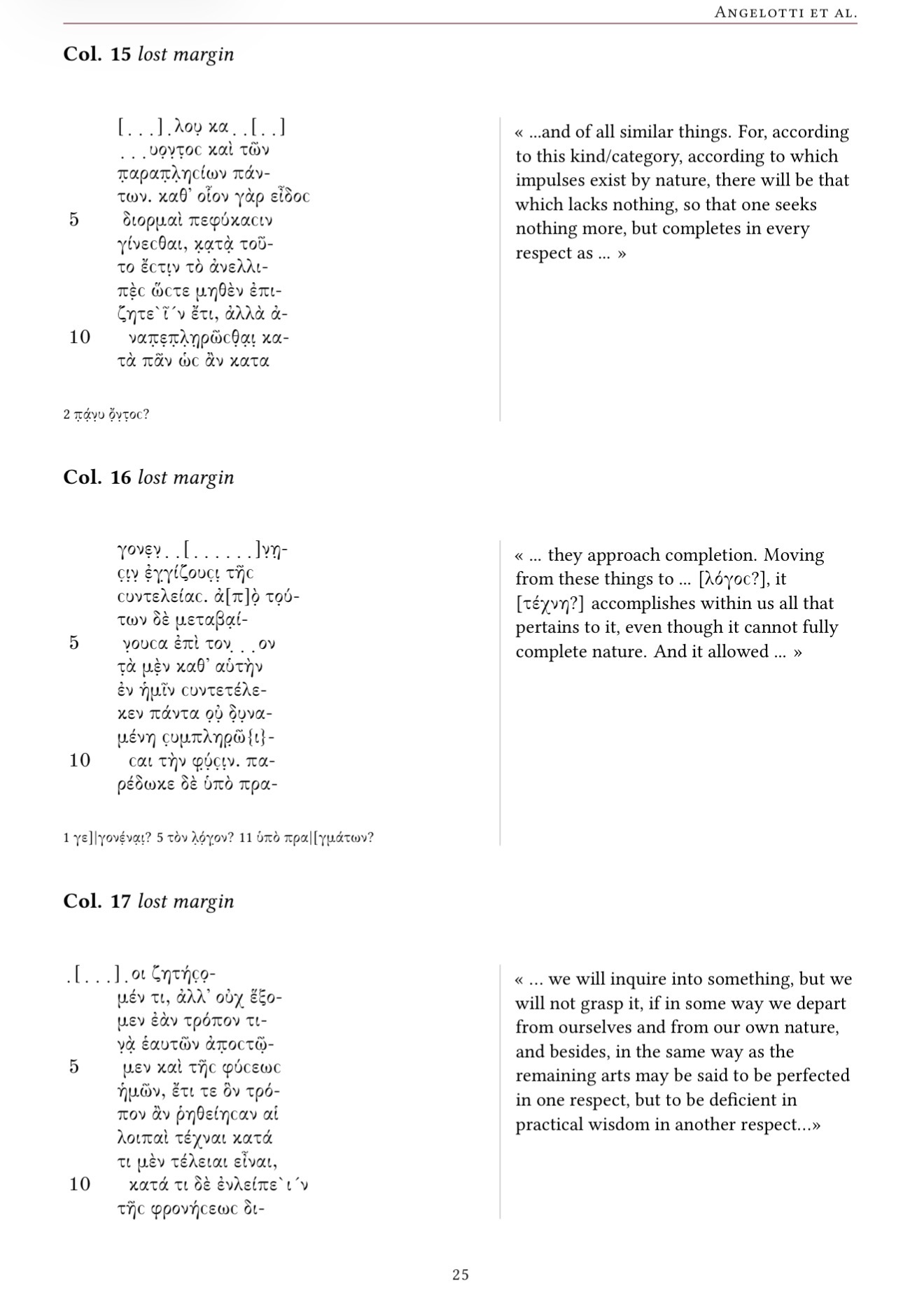
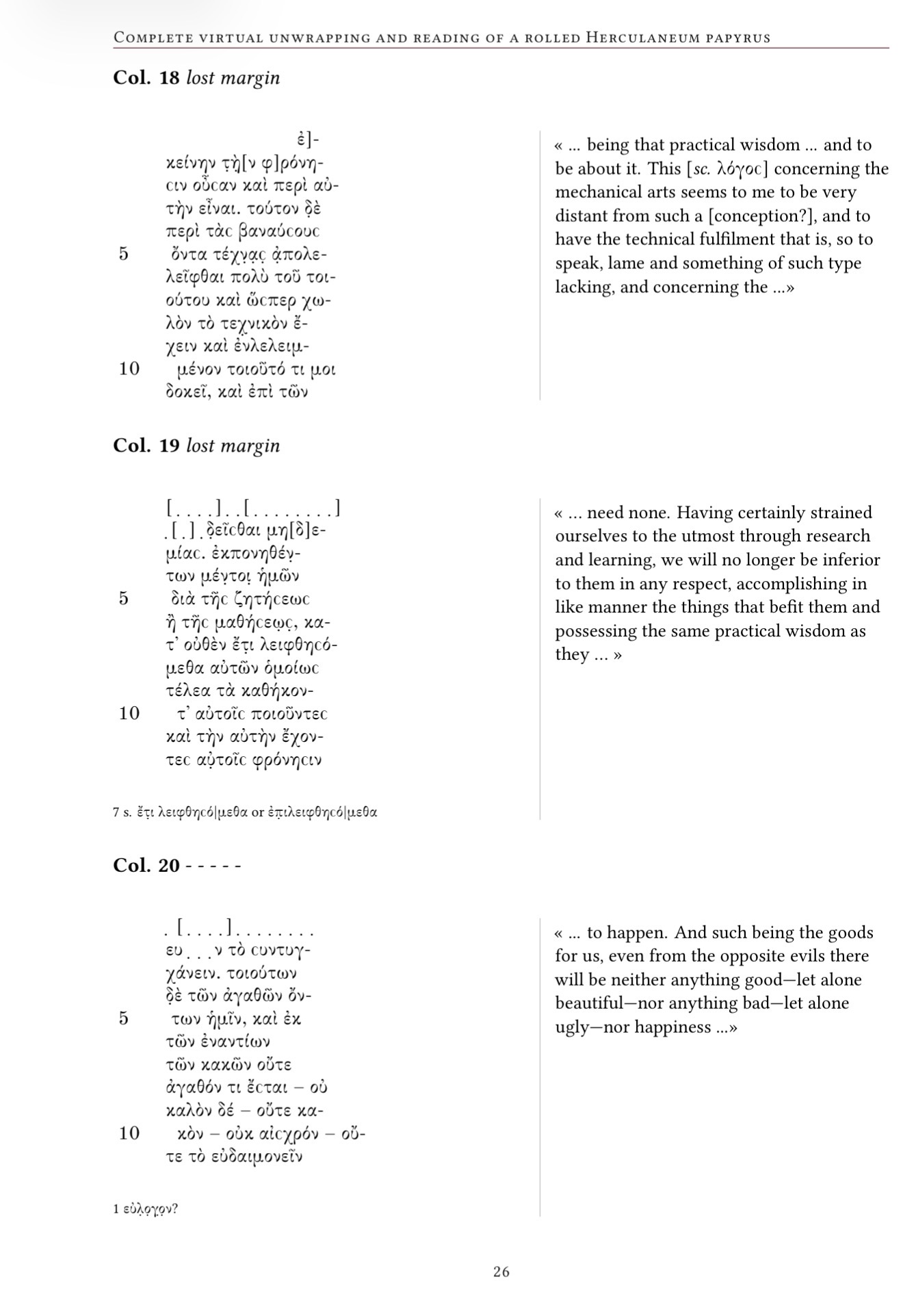
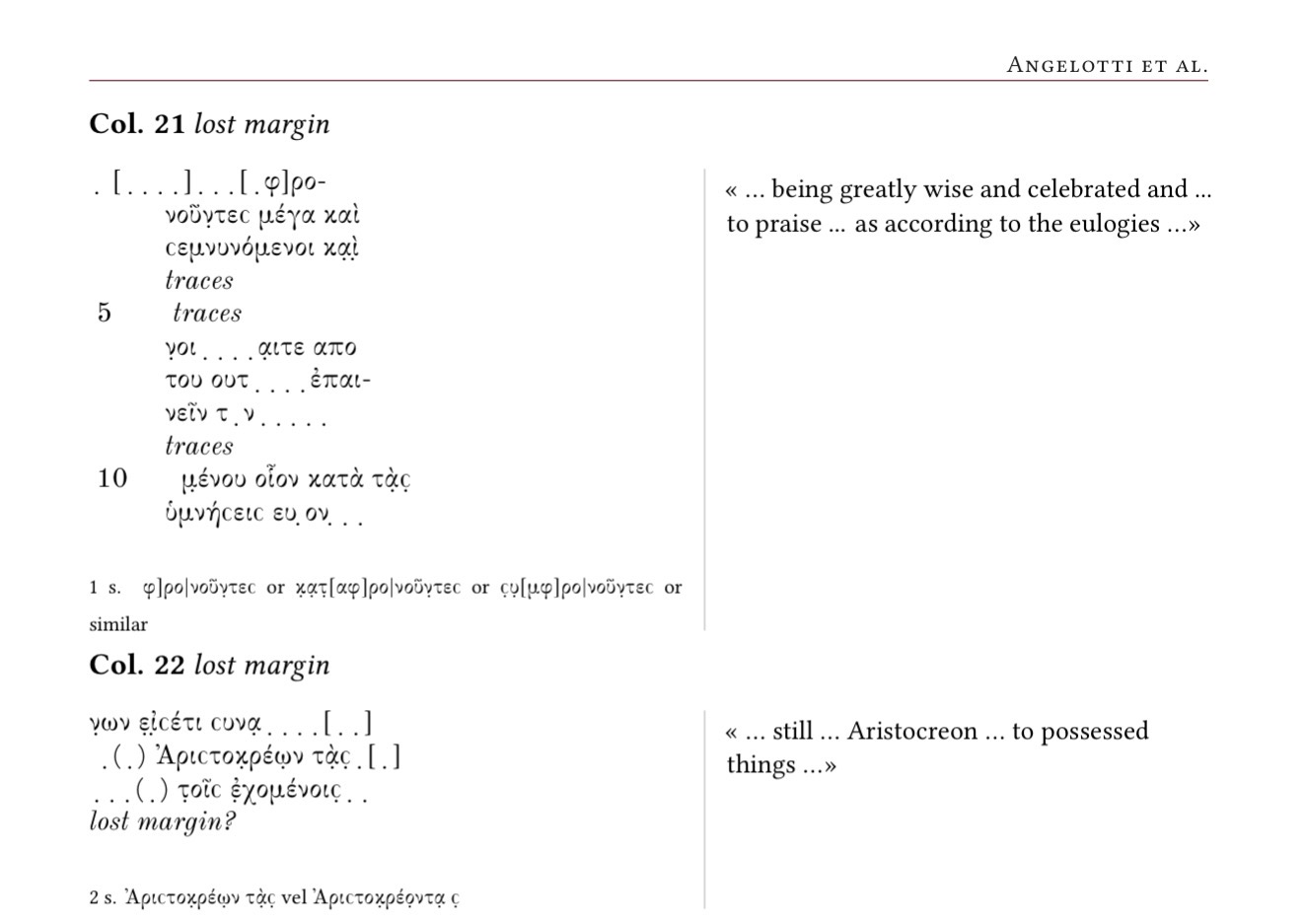
PHerc. 1667 is what survives of a larger roll: earlier attempts to open it by hand — in the nineteenth century, and again in 1969 and the 1980s — destroyed its outer layers and left only the compact inner core, about 8 cm of an original height of 19–24 cm. From that surviving portion we have now recovered and read the text in full— the lower parts of some twenty-two columns, transcribed and reviewed by papyrologists. It is the first time the preserved text of a rolled Herculaneum scroll has been read continuously, end to end, rather than in isolated words or patches.

The recovered text is a philosophical treatise on ethics, and the evidence points to a Stoic work: it turns on human nature, impulse, and the moral progress of human beings, and its final preserved column names Aristocreon — nephew and disciple of the great Stoic Chrysippus — which, together with the language and themes of the text, places it in a Stoic context and dates it to the 2nd century BC.

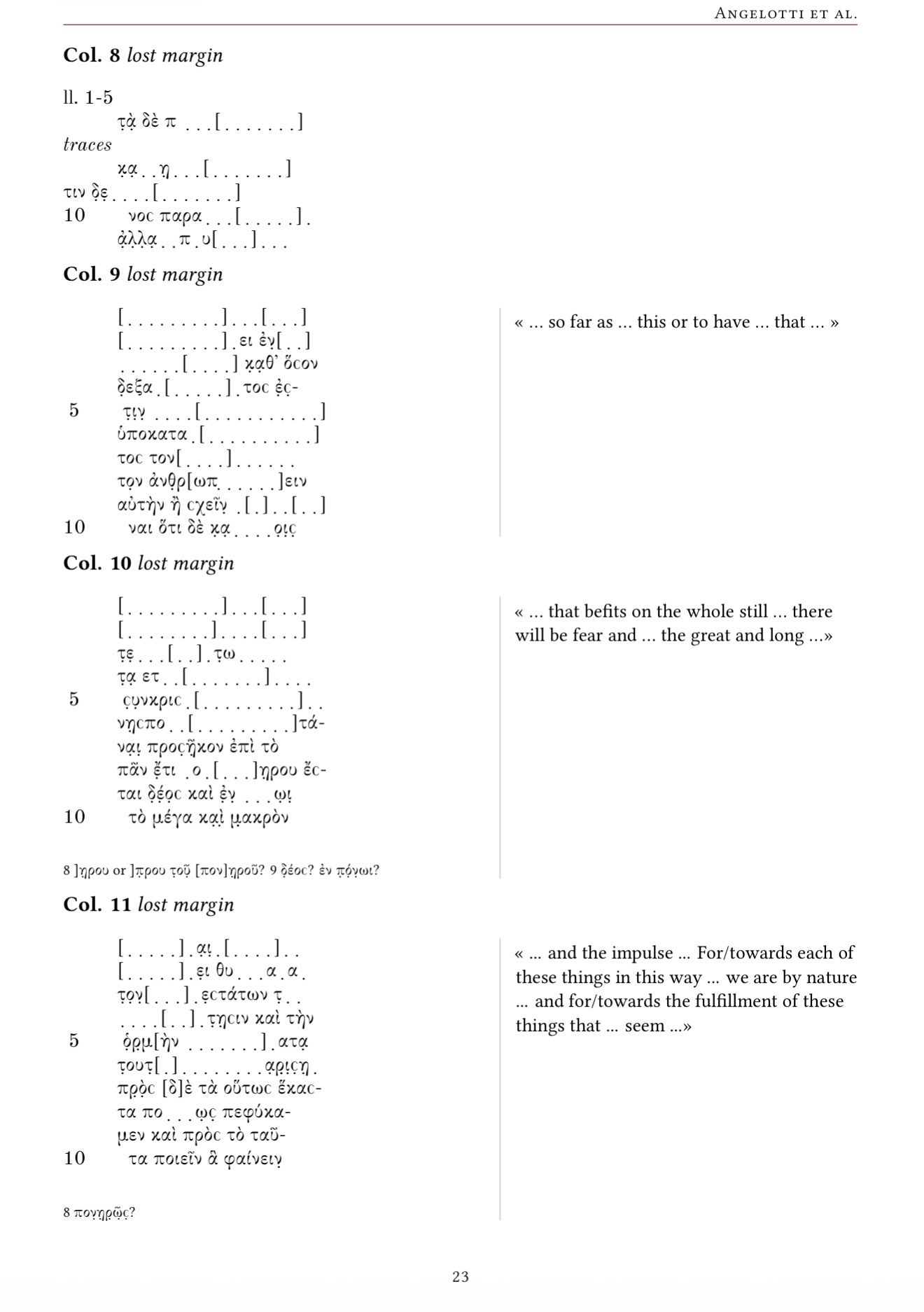
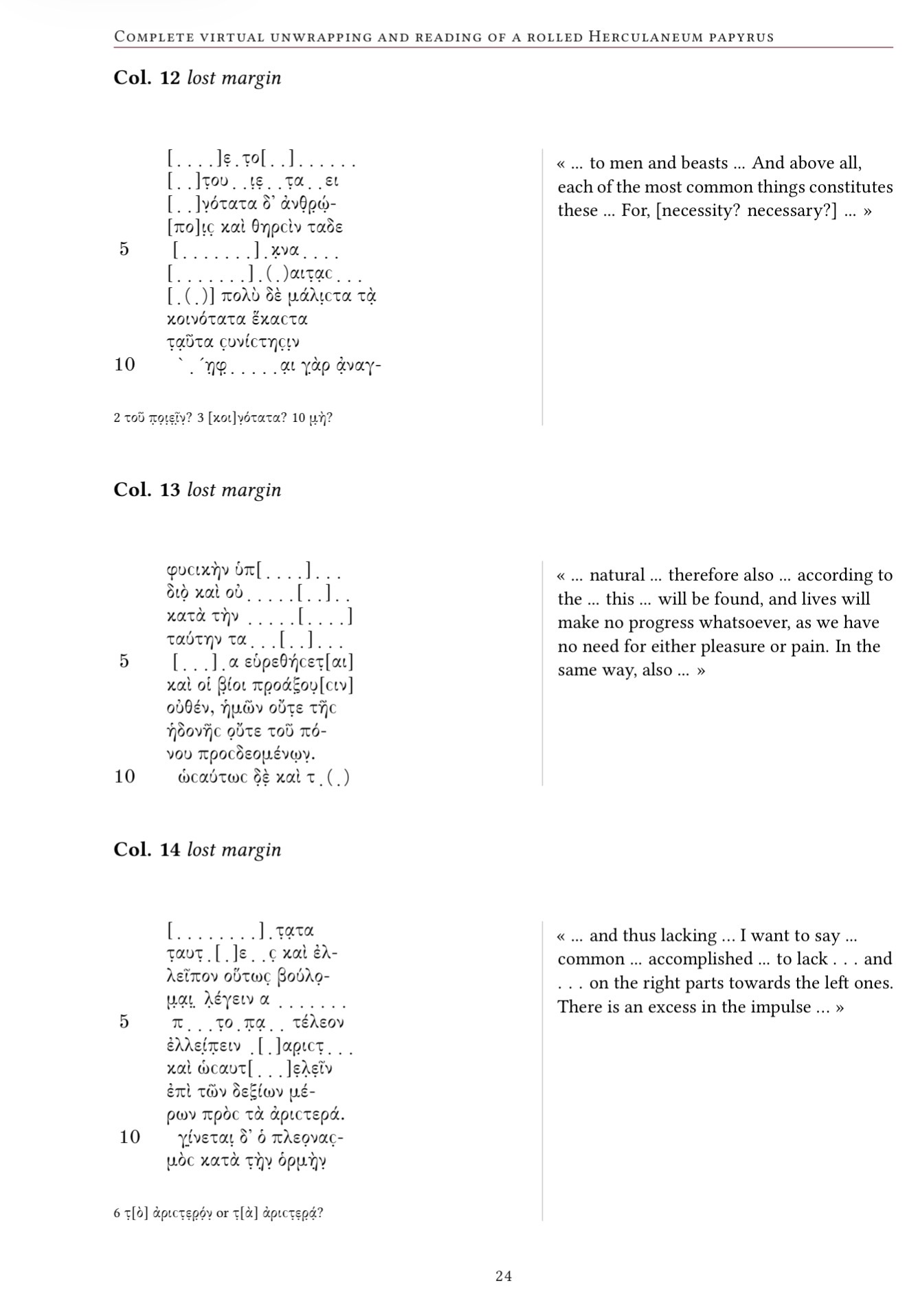
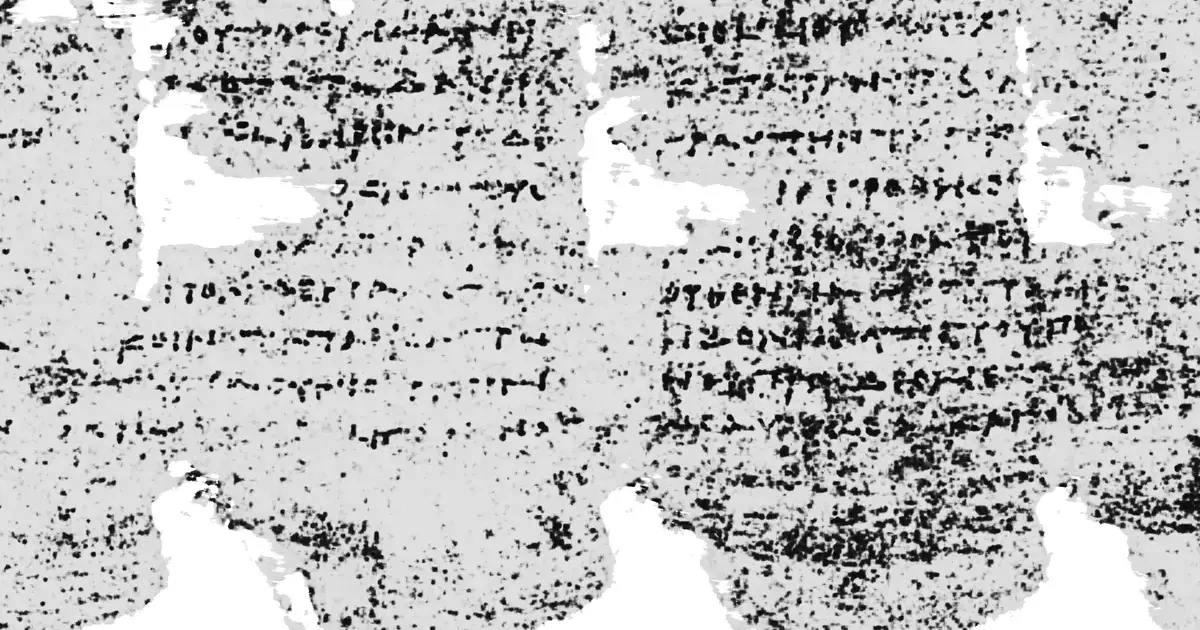
Because the papyrus is damaged, the readings are fragmentary, with gaps where the surface is lost. Even so, several passages can be read clearly for the first time in two thousand years:

"…we will inquire into something, but we will not grasp it, if in some way we depart from ourselves and from our own nature…"
"Having…strained ourselves to the utmost through research and learning…possessing the same practical wisdom…"
"…such being the goods for us, even from the opposite evils there will be neither anything good — let alone beautiful — nor anything bad — let alone ugly — nor happiness…"
Translated from the Greek; the full column-by-column transcription is in the preprint.

PHerc. Paris 4 — ink made visible by higher resolution

In a second scroll — PHerc. Paris 4, the scroll the Vesuvius Challenge community knows as Scroll 1 — a higher-resolution imaging technique makes the ink directly visible inside the scroll itself, in the three-dimensional X-ray data, for the first time. Segmented in 3D and projected back onto the unwrapped page, that ink matches the text read in the 2023 Grand Prize one-to-one — an independent confirmation, from better data, that the reading is real.

PHerc. 139 — a title, and an author

In a third scroll, PHerc. 139, we recover the scroll's title and author attribution: the work is identified as Philodemus, On Gods, Book 8 — a treatise by the Epicurean philosopher whose works fill so much of this library. Reading the title of a closed scroll tells scholars what a roll contains before a single column of its body is studied.

How it was done

The scans were acquired with high-resolution phase-contrast X-ray microtomography on the BM18 beamline at the European Synchrotron Radiation Facility (ESRF) in Grenoble — an instrument able to resolve the wafer-thin, densely packed layers of a Herculaneum roll. The work was carried out in collaboration with the National Library of Naples "Vittorio Emanuele III", which safeguards the Herculaneum papyri. From those volumes, the team reconstructed the scroll's geometry, traced and flattened its surface into a readable sheet, and trained machine-learning models to detect ink that is almost indistinguishable from the carbonized papyrus beneath it. Each reading was then examined and transcribed by papyrologists.

What's next

PHerc. 1667 is one scroll. Hundreds more remain sealed — an entire library of philosophy, poetry and prose waiting to be read for the first time since antiquity. The method shown here is built to scale, and everything needed to apply it is open.

If you want to help read the rest of the library:

The thoughts of the ancient world, sealed in darkness for two millennia, are coming back into the light — a whole scroll at a time.


Very exciting times. Now that they have the imaging methods and machine learning model figured out they can spend the resources necessary to scan all of the scrolls. We will hopefully uncover some important lost works from antiquity.
nWxQjkl4BacxGHdm.jpeg
 
I saw something about this earlier, but the article was focusing on the use of AI, not about all the other steps to even get there.

Truly fascinating and intricate work by the historians here!
 
That's so awesome! While the Vesuvius eruption was certainly a horrible tragedy, at least the eruption helped preserve so much history for us to learn from.
 
Exciting times. I would imagine there are many Qumran-like caves in particular out there filled with ancient scrolls. Exciting to know that we now may have the ability to A) narrow down search possibilities with the help of AI and B) read any that we find without damaging them.
 
Last edited:
There are supposedly many more scrolls yet undiscovered in the building where these scrolls were found.

Article:
The papyri appeared in the dwelling that bears this name, the Villa of the Papyri. A luxurious building that extended along 250 m on the Herculaneum coastline. To give us an idea of its magnitude, the peristyle garden measured 100 m and the fountain 66 m.

We don't know who built it, but we do know that one of its owners was Lucius Piso, an important Roman politician and military man, father-in-law of Julius Caesar. The "Historia Augusta" tells us about a cultured man who surrounded himself with philosophers and literati like Philodemus of Gadara.

Lucio displayed his power and culture in the decoration of the villa. In the peristyle he placed more than 80 statues and busts, among them Greek politicians and philosophers, and Roman military men such as Scipio Africanus. Also his own. And in the center Athena, goddess of war and wisdom.

But the villa, besides a rich collection of statuary in bronze or marble, beautiful frescoes, or ivory furniture, hid another secret that would end up giving it its name. In 1738, the Spanish engineers Roque Joaquín de Alcubierre and Pedro La Vega began the excavation of Herculaneum.

In 1750, Swiss engineer Karl Weber joined, who through tunnels accessed the villa and drew up its first plan. The excavation ended in 1765 due to sulfur emissions. In a small room with shelves and boxes, hundreds of carbonized parchment scrolls were discovered.

In the 1990s, excavation of the villa resumed. The atrium, baths, 16 rooms, 3 triclinia, and the villa's core structure were discovered. It was thus determined that the villa has 4 construction levels. It is dated between 60 and 40 B.C. However, it was decided to preserve what had been excavated, and work was not continued.

This sensational discovery has led the entire complex to be renamed the Villa of the Papyri. We are faced with a great library of Greek texts and, to a lesser extent, Latin ones, buried by lava and ash. Today, nearly two thousand are preserved in the National Library of Naples.

And there are two levels left to excavate. It's believed to be nearly 3000 m². Surely with many more scrolls buried, in fact the villa's main library hasn't been found yet. The Latin scrolls must be there. A treasure to be discovered.


Last edited:
'We have completely virtually unwrapped and read PHerc. 1667 — the scroll the Vesuvius Challenge community knows as Scroll 4 — without ever touching its pages.'

"…we will inquire into something, but we will not grasp it..."

Disbelief Wow GIF by TruRebels
 
Absolutely incredible stuff. I can't help but wonder how much our perception of the past shifts as more ancient scripts and scrolls are deciphered like this. Gotta be an exciting time to be an archaeologist.
 
I'm gonna laugh if this stuff is the equivalent of a bro message thread...

"Yo, your sister is fine! Can I ask her out?"

"Nay, friend, she is betrothed to a roman general, he's way richer than you, dog. 'Sides, I thought you liked them big booty african slave girls?"

"Shit, that's true, but they ain't marriage material, and to be honest they kinda scare me and I have to lock them up at night so they don't stab me in my sleep."

"Well, keep your pox ridden cock away from my sis, she's had it bad enough after her first three husbands all died within the first year of marriage."

"Some friend you are, guess I'll just take a quick trip over to Judea, I hear they are gonna crucify some people in a month. Hang on, I hear some rumbling, BRB AFK......."
 
I do not put much faith in the inference of man given proper context and AI is even less capable in this regard. The true content of Herculaneum scrolls eludes the modern world.
 
Last edited:
I love this shit.
So many of these scrolls went destroyed before the people who discovered them even understood what they were. Just by handling them and trying to figure them out.
I can almost feel the utter frustration of the scholars who had to give up any attempt and decided to preserve those things in the hope that someday someone would be able to read them, with tools that are tantamount to magic for their time. They dug in search of the past, but had to have tremendous faith in the future, too.

Seriously, look at that thing. It looks like a big, dried turd. You can barely touch it without making some pieces fall off. And yet now we can reconstruct what's written inside, without even touching it. It's just as bonkers as the fact that ancient papyrus even endured for 2000 years after being exposed to so much.
 
Now I am curious if pressing subjects like the gender pay gap or women's oppression by the patriarchy are mentioned anywhere in these scrolls. If not, we can safely conclude that it's just an ancient piece of mansplaining.
 
I love this shit.
So many of these scrolls went destroyed before the people who discovered them even understood what they were. Just by handling them and trying to figure them out.
I can almost feel the utter frustration of the scholars who had to give up any attempt and decided to preserve those things in the hope that someday someone would be able to read them, with tools that are tantamount to magic for their time. They dug in search of the past, but had to have tremendous faith in the future, too.

Seriously, look at that thing. It looks like a big, dried turd. You can barely touch it without making some pieces fall off. And yet now we can reconstruct what's written inside, without even touching it. It's just as bonkers as the fact that ancient papyrus even endured for 2000 years after being exposed to so much.
Indeed. As kruis kruis mentioned, the Villa of the Papyri is only partially excavated, but 1800 scrolls have been recovered and 600 are still unopened. There could be thousands more in the other floors of the villa.

We may have the right incentives to finish the excavation now that the scrolls can be read.


Absolutely incredible stuff. I can't help but wonder how much our perception of the past shifts as more ancient scripts and scrolls are deciphered like this. Gotta be an exciting time to be an archaeologist.

Yeah. It's unfortunate that the modern world won't care very much compared to the times of the Enlightenment, even if we uncover something incredible. We're getting rid of classics programs at universities throughout the West or transforming them into postmodern critical deconstructions. I hope that things course correct eventually, as the recovered knowledge of antiquity is literally responsible for the world we've come to live in over the past few hundred years.


Either way, I'm grateful that a handful of techbros are funding this work and building the cutting edge technology alongside the archaeologists taking care of the artifacts and dig sites. It's one of the most exciting projects being worked on currently.
 
It is very clever, however the headline implies all the original words on the entire scroll have been read.

That isnt the case the readings are fragmentary, with gaps where the surface is lost.

So I worry its more about look how clever we are, not about the value of the writings in any meaningful historical contribution
 
It is very clever, however the headline implies all the original words on the entire scroll have been read.

That isnt the case the readings are fragmentary, with gaps where the surface is lost.

So I worry its more about look how clever we are, not about the value of the writings in any meaningful historical contribution
This is the coolest fucking thing I've seen in a while. Incredible.

VXyGZbbUJtkwFZZm.png
 
It is very clever, however the headline implies all the original words on the entire scroll have been read.

That isnt the case the readings are fragmentary, with gaps where the surface is lost.

So I worry its more about look how clever we are, not about the value of the writings in any meaningful historical contribution
You can't read something that doesn't physically exist. The scroll as it physically exists has been read in full for the first time, which has not been possible until now as it is a roll of cinder. The title of the thread and the announcement are not clickbait.
 
It's just difficult to believe that humanity even developed the technology to do this - this is, for all intents and purposes, a black magic level feat.

It will never actually happen, but one part of me really wishes the time travel was possible, even if it was "just to send a drone" back in time, to preserve so many literature (epics, stories, myths, documents...) which will eventually end up being lost in the sands of time.

But then again, maybe it's exactly because so much of it is lost, and we will never recover it all in entirety, that makes what we do have so priceless.
 
Yeah. It's unfortunate that the modern world won't care very much compared to the times of the Enlightenment, even if we uncover something incredible. We're getting rid of classics programs at universities throughout the West or transforming them into postmodern critical deconstructions. I hope that things course correct eventually, as the recovered knowledge of antiquity is literally responsible for the world we've come to live in over the past few hundred years.


Either way, I'm grateful that a handful of techbros are funding this work and building the cutting edge technology alongside the archaeologists taking care of the artifacts and dig sites. It's one of the most exciting projects being worked on currently.
I think a better appreciation for the past will return sooner than later, partly accelerated with significant feats like this one. Movements come and go, and humanity certainly seems to enjoy cycles of boom and bust. But we inevitably bounce back.

The other thing that I love about this whole non-destructive unwrapping is the publishing of the original text for anyone to see. Scholars will undoubtedly spend decades going back and forth on the accuracy of what is being translated, perceived intent, critical context, etc. Using this approach keeps any one person from establishing their own narrative and ensures we can always get another set of eyes on the material. Some unknown, random stranger who happens to have internet access might come across the text one day and give insight that might blow all our minds.

Anyways, looking forward to seeing more ancient texts uncovered.
 
Went to Pompeii two years ago. Unfortunately didn't have time to visit Herculaneum as well, apparently it's even better. Will have to go back at some point, Naples was very affordable.
 
Can we also take a moment to appreciate how hard it was to make - and read - books at that time (and for a very long time after then)?
Papyrus wasn't cheap. Writing anything that can considered book length by today's standards, by hand, with ink, and in good handwriting like you often see in these scrolls, was torture. And then putting all the pieces of written paper together to make the rolls, which could be pretty hefty (the roll here is described being around 20 cm in height, which I assume should actually be its diameter, which is a thicc one). Even reading one of these was probably no small work, considering they had no modern punctuation. And this villa had hundreds of rolls.

(all of which suggests that dudes like the owner of the villa must have been avid collectors, rather than avid readers. You could basically only read poems, theatrical works, or historic/philosophical works in those times. There were no novels. And even a very passionate reader of philosophy surely would know that even then, there must have been a lot of stuff not worth reading twice, if even once. Sure, a complete book could take several scrolls, but how likely it could be that there were really rich people that much into this reading thing as to have hundreds of works and actually read them all?)

I'd love to be able to see what a "bookshop" looked like in Imperial times. And also the places where people worked to copy the scrolls.
 
Amazing that they're able to do this.
It's a good argument for NOT messing with everything using 'present day' technology. Digging up or trying to unroll stuff can be inherently destructive compared to who knows what type of tech we may having in future generations.

That said, we need to be digging down to that shit under the pyramids, STAT!
 
It's just difficult to believe that humanity even developed the technology to do this - this is, for all intents and purposes, a black magic level feat.
It is in essence the same tech that reads amounts on digital scans of checks. Most individuals have experienced how that is not foolproof.

Beyond that, archaeologists used to do something similar manually with specialized chemicals and imaging technology without AI hallucinations in play.
 
It is in essence the same tech that reads amounts on digital scans of checks. Most individuals have experienced how that is not foolproof.
When a check is scanned OCR is being performed to identify individual characters. Those characters can be misidentified due to differences in fonts, photo capture data and lighting conditions, etc.

When OCR misidentifies a character, that is not an AI hallucination, it is an incorrect guess, classification error, based on the available input, e.g. an S vs a 5. Machine learning is not an LLM chatbot.

The ML process here is differentiating writing from non-writing. There is nothing to hallucinate. Once the model solved for the conditions successfully it could identify all of the text in the scroll.

An unsuccessful model would not create text out of thin air like an AI hallucination, it would simply fail to pick out the text in the scroll by either missing real text or selecting noise instead of text.
 
When a check is scanned OCR is being performed to identify individual characters. Those characters can be misidentified due to differences in fonts, photo capture data and lighting conditions, etc.

When OCR misidentifies a character, that is not an AI hallucination, it is an incorrect guess, classification error, based on the available input, e.g. an S vs a 5. Machine learning is not an LLM chatbot.

The ML process here is differentiating writing from non-writing. There is nothing to hallucinate. Once the model solved for the conditions successfully it could identify all of the text in the scroll.

An unsuccessful model would not create text out of thin air like an AI hallucination, it would simply fail to pick out the text in the scroll by either missing real text or selecting noise instead of text.
Semantics change over time. Machine learning is nondeterministic always.
 
Last edited:
What's bullshit about it? Just curious

I just think it's a dreadfully boring thing to survive, that's all. These scrolls are all in Greek and the majority appear to be about something that's not even popular today, compared to other schools of thought. Bombshells like the recent Plato discovery are probably rare.

A Latin section of the library is probably right under the Greek section. If it covers a broader range of subjects, it might preserve literature, books on history and samples of Etruscan or Getic. If it's not another philosophy collection, the chances of it having lost books by Caesar, Claudius, Ovid and many others are higher than the Greek section revealing a Strabo or Diodorus.

However, the Greek scrolls were in the process of being packed for transport when the town was buried. If the Latin scrolls were shipped first, they're lost forever.
 
Last edited:
the Greek scrolls were in the process of being packed for transport when the town was buried. If the Latin scrolls were shipped first, they're lost forever.
I didn't know about this. Taking a wild guess, I suppose that someone who cared so much about culture in those times would prioritize Greek stuff and ship that first because they considered it more important. On the other hand, it's possible that the person loved heir Greek scrolls so much, they wanted to keep them for a while longer and ship those last.

However it goes, I love that modern tech allows us to recover texts that for all intents and purposes are not there anymore. Like we can recover texts from scrubbed parchment that was then written over in medieval times.
 
Top Bottom