• Hey Guest. Check out your NeoGAF Wrapped 2025 results here!

Laura Fryer - From Midnight Magic to Grave Dancing: What Happened to Gamers and Devs

winjer

Gold Member


Remember when dropping a new game felt like Christmas morning for every one, players and devs alike? Today it feels completely different. Games like Marathon launch and immediately become battlegrounds with rabid defense on one side and early grave dancing on the other. Why do so many gamers now cheer when expensive projects struggle? What happened to the camaraderie? As a gamer first and a game developer with experience at Xbox, Epic, and Warner Bros., I break it down from both sides. We look at how the industry went from small passionate teams and healthy competition to big business, live service models, gatekeepers, and shifting priorities that eroded trust on all sides.

AI Summary

This video transcript explores the evolving relationship between game developers and gamers, reflecting on the shift from a close-knit, passionate community to a more fragmented and contentious dynamic. The narrator nostalgically recalls the earlier days of gaming culture when midnight launches and new game releases felt like celebratory events shared by both players and developers. Back then, the gaming industry was smaller, teams were relatively compact (ranging from 10 to 100 people), and developers were often gamers themselves, deeply connected to their audience and the creative process.
  • Smaller, Passion-Driven Industry Origins
    Early game developers were often hobbyists and modders who understood player desires firsthand. Without large-scale marketing or corporate pressures, games were judged mainly on fun and innovation. Developers like John Carmack, who co-founded ID Software, exemplify this era by pioneering the first-person shooter genre with shareware distribution models that relied on player enthusiasm rather than big budgets.
  • Anonymity of Developers
    Unlike today's celebrity-driven culture, developers were mostly anonymous, allowing them to focus on their craft without managing public personas. Feedback came organically from fellow gamers via forums or emails rather than through social media or influencer channels.
  • Impact of Mainstream Commercialization and Big Business
    As gaming became mainstream, investors and publishers entered the scene, shifting the focus from creating fun games to hitting financial targets. The rise of resellers like GameStop meant developers received revenue only from initial sales, while used game sales undercut studio income. This financial pressure pushed publishers toward live service models, featuring always-online requirements, microtransactions, battle passes, and digital rights management (DRM) to secure continuous revenue streams.
  • Consequences of the Live Service Model
    Games increasingly became license-based rather than fully owned products, often requiring constant online connectivity and offering in-game purchases, which changed the player experience fundamentally. Some high-profile failures, such as Concord, have sparked backlash as gamers reject these monetization-heavy experiments.
  • Role of Media and Influencers in Gatekeeping
    The traditional press once acted as gatekeepers focusing mostly on the games themselves. Now, influencers and content creators are often paid or given early access to promote games, sometimes without transparent disclosures, eroding gamer trust. The 2016 Warner Brothers FTC settlement over undisclosed influencer payments for Middle-earth: Shadow of Mordor is cited as a key example.
  • Social Media and Developer-Player Tensions
    Developers sometimes respond defensively on social media when criticized, which can alienate fans. Internal studio politics and priorities unrelated to gameplay quality—such as pushing political messages—can further widen the divide. Controversial statements or actions by developers can quickly escalate into online "rage bait," damaging reputations and trust.
  • Erosion of Trust and Community
    The combination of monetization pressures, media gatekeeping, and social media dynamics has eroded the camaraderie that once united gamers and developers. Players feel exploited when games seem designed primarily to extract money rather than to entertain, while developers may feel misunderstood or attacked.
  • Hope for Reconciliation
    Despite these challenges, the narrator emphasizes shared goals: both developers and players want great games. He calls for mutual grace and understanding, recalling the rewarding energy developers receive from positive, genuine fan feedback, such as that seen with Baldur's Gate 3.
 
Last edited:
The gatekept industry drove out a ton of the OG passionate and raw talent, replaced them with walking on eggshells "toxic positivity" half-assed pretenders that churn out games with ideological driven undertones (and often on the nose); fresh out of the uni drivel. Complete with overly simplistic systems and game design that feels like we are going backwards to the PS2 era and not forwards.

Western gaming is cooked if they don't start righting the ship now.
 
Last edited:
I think she gets two pieces right, Agenda driven developers and the people making games are no longer the people playing them.
 
Just like with other forms of entertainment, gaming got infiltrated by politics and now every game has to be categorized as woke vs based. So now you'll have one side shitting on games like Veilguard, and the other shitting on Crimson Desert.
 
I think she gets two pieces right, Agenda driven developers and the people making games are no longer the people playing them.

Yes, it used to be that games were made by gamers, for gamers. Now a lot of games are made by people who hate games, for no one. And when no one buys their game, they blame gamers, instead of themselves.
 
Can be explained in one word. Not sure is Mrs. Fryer says it because I haven't watched it.

The industry and game press has been hostile to the paying customers and fans for a decade now. Is it really surprising there would be bitterness?
 
images

Marvel%27s_Spider-Man_2_20231012162422.jpg


Strange how you draw a direct line where games started doing shit like this and people started rooting for them to flop. I want to play a game not be lectured by leftoid redditors.
 
Humans form in-groups to satisfy fundamental social needs for belonging, security, and shared identity. As globalization and social media expanded our backyard, battle lines were always going to inevitably be drawn. It's in our nature. Over time these lines became narrower and narrower to the point where any large media property has battle lines around it.

This isn't about gaming, in fact it's affecting all facets of society. Nothing is universal anymore.

This is a flaw in human programming. It's human slop. Can we see past our own limitations and find a way to get along outside of our in-groups? Only time will tell. We already know the answer.
One person is cloned, billions of times. That clone becomes everyone. Everyone else naturally dies off. Now human is just "man" and AI and Man will have no battle lines. An immortal ubiquitous dynasty.
the-power-of-the-sun-in-my-hand-v0-aygbflbs40rc1.jpg
 
Last edited:
When the industry was run by people who had to grow the customer base. Their opinion was that gamers were all retards who don't know what they want and will buy anything you put out anyway because they can't help themselves when faced with the waves of toxically positive bullshit from game media. The ones who chose the dark cynical path was absolutely them in every regard.
 
I remember the "gamers are dead" era and many of the western devs were complicit in that line of thinking.
The cuurent landscape is just the chickens coming home to roost.
 
Developers thought they could shoehorn identity politics into games to attract a new audience, while keeping their core gaming audience.


They were wrong.
 

Because games like Marathon are live service crap that are designed with the intention of hoping to create the most addicting repetitive game that is rewarding but not too rewarding so people keep playing to hopefully get something they like but end up spending more money when they don't. I'll always grave dance on live service slop and something that feels like it's designed to reach into a players wallet when they're not looking.
 
Developers thought they could shoehorn identity politics into games to attract a new audience, while keeping their core gaming audience.

And now activist gamers are pinning identity politics onto every game on the thinnest of pretexts.

Gaming culture has always been tribal, but where we are right now is a new and unwelcome extreme because so much is projection and guilt by association.
 
Because games like Marathon are live service crap that are designed with the intention of hoping to create the most addicting repetitive game that is rewarding but not too rewarding so people keep playing to hopefully get something they like but end up spending more money when they don't. I'll always grave dance on live service slop and something that feels like it's designed to reach into a players wallet when they're not looking.
Yep. The AAA industry is releasing business models with a game attached. The over-engineering of these live service games removes all the fun out of them. I was having a blast in BF6 until all of that battle pass shit dropped where you gotta play a bunch of modes and weapons that you don't want to just to unlock things. I didn't want to engage with any of that shit and dropped the game entirely.
 
Because games like Marathon are live service crap that are designed with the intention of hoping to create the most addicting repetitive game that is rewarding but not too rewarding so people keep playing to hopefully get something they like but end up spending more money when they don't. I'll always grave dance on live service slop and something that feels like it's designed to reach into a players wallet when they're not looking.
Multiplayer games used to be just for fun. I remember playing Halo and Starcraft just because I was having a good time.

Now it's about levelling a battlepass with fomo mechanics.
 
Last edited:
Multiplayer games used to be just for fun. I remember playing Halo and Starcraft just because I was having a good time.

Now it's about levelling a battlepass with fomo mechanics.

Gamer habits also changed, though. People could play Goldeneye and Halo MP for a long time.

These days, endless complaints demanding more and more content. Play a map for a month and folks are already bored and wanting the next thing.

Less than 3 months after the very popular BF6 launch and people were already damning the dev team for limited content.
 
I don't really like his podcast anymore because he doesn't really seem to enjoy modern games anymore, but a couple years ago or something like that Jeff Gerstmann had Adam Boyes on his show, and Boyes basically said that a big part of the problem is that it's really hard for a game dev studio to make hit after hit. At a certain point, something's probably not going to do well, and that can be the end of a company, especially with these giant modern budgets, or lead to huge changes, like what happened to Square after Spirits Within bombed. So now they rely on analytics to decide what games get made, and how.

That doesn't seem to explain how all this weird agenda shit got into games, but it must be at least in part that someone managed to convince a lot of these business people at some point that this is what the kids wanted. And because games take so long to get made, it's taking a long time to where we see a course-correction.

That's not gonna fix the problem of games being designed according to analytics, of course. Idunno what it would take to change that. Hopefully things will become less crazy once less people are required for lighting and texture creation and voice acting and animations and so on?

I could be wrong, but that's what I think.
 
Last edited:
I usually don't like to dunk on games and cheer for failure, there are hard working people behind them, but live service games are a fucking cancer on the industry that is being designed to create an addiction in order to extract as much money as they can. It's downright evil. And since Marathon is a subject for debate in the video, Sony has everything coming for them, since they've actively shunned their loyal fans in pursuit of their of their live service plans. They deserve to go bankrupt after fucking over their fanbase like this.

And when we talk about western gaming in general, they have only themselves to blame for this grave dancing attitude that gamers enjoy nowadays. For years developers and journalists have been targeting their core audience calling them racists, sexists and every other ism, for not accepting their forced inclusiveness and progressive bullshit that has been shoe horned into every fucking big game even if it doesn't make sense doing it. And they do so while also delivering broken games, predatory micro transactions, paid online and a multitude of other crap we have to endure just to play games.

Gamers are fed up with this fucking bullshit. No wonder eastern gaming devs are steamrolling west right now. Enough is enough.
 
Mr Hyde Mr Hyde It makes me sad that I've gotta mostly agree with you. That said, I don't want Sony to go out of business, and I really hope they figure out a way to turn things around. I mean it's not like all their games are so cynical, that Ratchett and Clank game looks neat even though it's not my thing., for instance

Maybe once we enter the raytracing-only future, and they figure out dynamic voice acting and get better at dynamic animations they'll be able to reduce dev team/management sizes and dev time back to something sane? And make more risky games again.
 
Last edited:
Gaming is a zero-sum game now. Platforms, genres, monetization types. The success of one affects the industry at large and leaves less resources for alternatives. You even see this outside of culture wars/platform warring. BotW/TotK vs traditional Zelda games for example.

We need more smaller, cheaper games made by reasonably sized dev teams, released at a quick pace.
 
She brings up some good points, but I also think there is a lot of generalization.

I've seen lots of people on youtube and podcasts talk as if "everyone hates everything now", as if there's some inherent hostility between gamers and devs that affects every game, and most gamers are just waiting to cheer on the next game failing. And I don't think it's necessarily true.
From the top of my head and thinking only about last year, I don't remember there being some big hate campaign against games like Expedition 33, Blue Prince, Silksong, Hades 2, Hell is Us, DK Bonanza, Silent Hill F, Split Fiction, Battlefield 6, Dispatch, NG Ragebound, Sword of the sea, Death Stranding 2, The Alters, Ball X Pit, Trails in the Sky Remake, etc.
That's not to say that no one bitched about these, just that there wasn't a big sentiment of hate and everyone excited to see them fail.

The games that get affected by this are almost exclusively those pushing forced woke shit and GAAS. And while there are many of those, it's not every game.
 
On the night the PS3 released, my best buddy and I were waiting in front of the Gamestop which was open at 3AM for the midnight launch sale to pick one up. The police were there with guard dogs to ensure the Gamestop won't get robbed. We then spent the next few days without sleep binging through Motorstorm day and night. Laura is right, nobody does that kind of thing anymore.
 
There are more Activists tarned as Video Game Developers in this Industry than actual real Video Game Developers who are passionate about making and playing Video Games!!!
 
Gaming is a zero-sum game now. Platforms, genres, monetization types. The success of one affects the industry at large and leaves less resources for alternatives. You even see this outside of culture wars/platform warring. BotW/TotK vs traditional Zelda games for example.

We need more smaller, cheaper games made by reasonably sized dev teams, released at a quick pace.
I don't think it is, I just think there are small minded people who might view it that way. It's what fuels console wars after all. The idea that one side has to lose if the other wins. Nope. And just like your examples here, they aren't valid. BotW/TotK don't remove past games from existence. I think there are "resources" for good games that come out, given something actually releases that warrants the price.

Side note: Just saw the pronouns below the avatars and thought "Oh no ..."

Then I remembered the date. Very "funny." :-P
 
On the night the PS3 released, my best buddy and I were waiting in front of the Gamestop which was open at 3AM for the midnight launch sale to pick one up. The police were there with guard dogs to ensure the Gamestop won't get robbed. We then spent the next few days without sleep binging through Motorstorm day and night. Laura is right, nobody does that kind of thing anymore.
Well, most of us aren't doing that kind of thing anymore cus we don't have time at our age lol.

I have absolutely no idea what the older teenagers and people in like their early 20s are up to these days. I have a hard time believing that ALL of them are just playing gaas games on their phone and being adhd and retarded all the time, though :pie_open_mouth:.
 
Last edited:
I don't think it is, I just think there are small minded people who might view it that way. It's what fuels console wars after all. The idea that one side has to lose if the other wins. Nope. And just like your examples here, they aren't valid. BotW/TotK don't remove past games from existence. I think there are "resources" for good games that come out, given something actually releases that warrants the price.
Completely disagree. The last traditional 3D Zelda game was Skyward Sword in 2011. That's 15 years ago. Seeing how popular BotW and TotK are, safe to say we're getting at least another one of those. With how long it takes to develop these games now, we're probably looking at 25 year of absence for trad Zelda games. That's a crushing 'defeat' for a portion of the fanbase. A third of their life is going to pass by without a new game.

The existence of old games has nothing to do with it. When your favorite band breaks up, you can still enjoy their previously released music, but it sucks there won't be new stuff and that they're not performing anymore. Should be pretty obvious that's not a positive thing.
 
With all due respect, I cannot stand someone who needs to remind about his (in this case her) credentials as proof of validation in EVERY POSSIBLE OPPORTUNITY.

I'd bet about half her views on each video is new viewers. It is what it is. Half the ps5 install base is new to PlayStation. I just found out about the band Puscifer with this new album and it's like their 5th.
 
Judging from a lot of responses, people can't separate themselves from their own biases to be able to answer the question posed. Maybe it's a shockingly good example of what she's even asking.
 
With all due respect, I cannot stand someone who needs to remind about his (in this case her) credentials as proof of validation in EVERY POSSIBLE OPPORTUNITY.

Sorry guy, but that sounds like insecurity to me.

Credentialism is only an issue when what's being presented is eminence based in academic or institutional qualification.

Because that leads to scenarios where only certain bodies/schools of thought are considered as being fundamentally valid and truthful.

A person describing their career achievements and activities as a means to express why their views are informed and educated by lived experience is a whole other thing, because they are representing themselves, not an orthodoxy that must be considered as ground truth.

For example, I worked in games for decades, and that factors heavily into how I interpret everything to do with games and gaming. Now that doesn't mean to say my opinions must always be the right ones, but there is value in me stating how that life experience has shaped my beliefs and perspectives, and how in turn that has had a formative effect on my opinions about the topic in question.

Its not claim to authority, its just a biographical fact that is relevant to my viewpoint. One that objectively deserves to be factored into judging my credibility in speaking on the subject, because if actual experience doesn't matter - what the hell does ?

In the end, you have to ask yourself do you want to hear an honest opinion that may challenge your understanding, or do you just want to hear the views of any uninformed idiot so long as they parrot what you want or expect ?
 
The gatekept industry drove out a ton of the OG passionate and raw talent, replaced them with walking on eggshells "toxic positivity" half-assed pretenders that churn out games with ideological driven undertones (and often on the nose); fresh out of the uni drivel. Complete with overly simplistic systems and game design that feels like we are going backwards to the PS2 era and not forwards.

Western gaming is cooked if they don't start righting the ship now.

Hey man, PS2 era was peak gaming. Its was a time where even Xbox was also doing great with its games. Don't compare whatever trash we have now to with what gaming was back then.
 
Sorry guy, but that sounds like insecurity to me.

Credentialism is only an issue when what's being presented is eminence based in academic or institutional qualification.

Because that leads to scenarios where only certain bodies/schools of thought are considered as being fundamentally valid and truthful.

A person describing their career achievements and activities as a means to express why their views are informed and educated by lived experience is a whole other thing, because they are representing themselves, not an orthodoxy that must be considered as ground truth.

For example, I worked in games for decades, and that factors heavily into how I interpret everything to do with games and gaming. Now that doesn't mean to say my opinions must always be the right ones, but there is value in me stating how that life experience has shaped my beliefs and perspectives, and how in turn that has had a formative effect on my opinions about the topic in question.

Its not claim to authority, its just a biographical fact that is relevant to my viewpoint. One that objectively deserves to be factored into judging my credibility in speaking on the subject, because if actual experience doesn't matter - what the hell does ?

In the end, you have to ask yourself do you want to hear an honest opinion that may challenge your understanding, or do you just want to hear the views of any uninformed idiot so long as they parrot what you want or expect ?
Let's agree to disagree. If you need to post your credentials (or even worse, your EX credentials) every single fu**ing time as a form to validate your experience... that sounds like insecurity to me. Note that im not even questioning her opinion on that matter. But yes, I do quesiton the fact that Laura needs to remind every fu**ing single time that she has experience in this field, which, FOR ME, translate as 'my opinion is better than yours'.
 
Aaa Industry to gamers:
"You all suck, now give us all your money and eat this dog turd. Did I tell you I hate you?"

Gamers to industry:
flame thrower fire GIF


Industry:
"Why aren't you bigots buying our games?"
 
half-assed pretenders that churn out games with ideological driven undertones (and often on the nose); fresh out of the uni drivel. Complete with overly simplistic systems and game design that feels like we are going backwards to the PS2 era and not forwards.

Western gaming is cooked if they don't start righting the ship now.
The example game she uses, Marathon, has been called too complex and difficult and has no ideology in it whatsoever. It aint that. It's just tribalism. People nowadays often catagorise all AAA as trash and western games too even if they don't exhibit any of those things. It's kind of sad but they don't really have standards it's just "this game is hated, this game is not" and it snowballs from there. There seems to be no real middle ground of I don't like X about it but enjoy Y. It's just extremism all the way.
 
Why I love seeing Western studios go up in flames:
  • Obsession with making females look and act like men
  • Social justice preaching
  • Obnoxious holier than thou attitude
  • Lack of accountability and childish outbursts against fans and even other developers (strangely all Asian)
  • Lack of passion
  • Hypocrisy
  • Flip flopping on what constitutes "realistic" when it suits them
  • Making lame excuses for their failures (wahh, hate campaign, wahh, Youtubers, wahh, Steam CCUs, etc)
  • Their games in general aren't as good as they used to be.
 
Last edited:
Grave dancing happens when publisher, devs, are attacking gamers.

kMcF6bsEx6KCsFmQ.png


vz6IzyqtFIBvhTtk.png
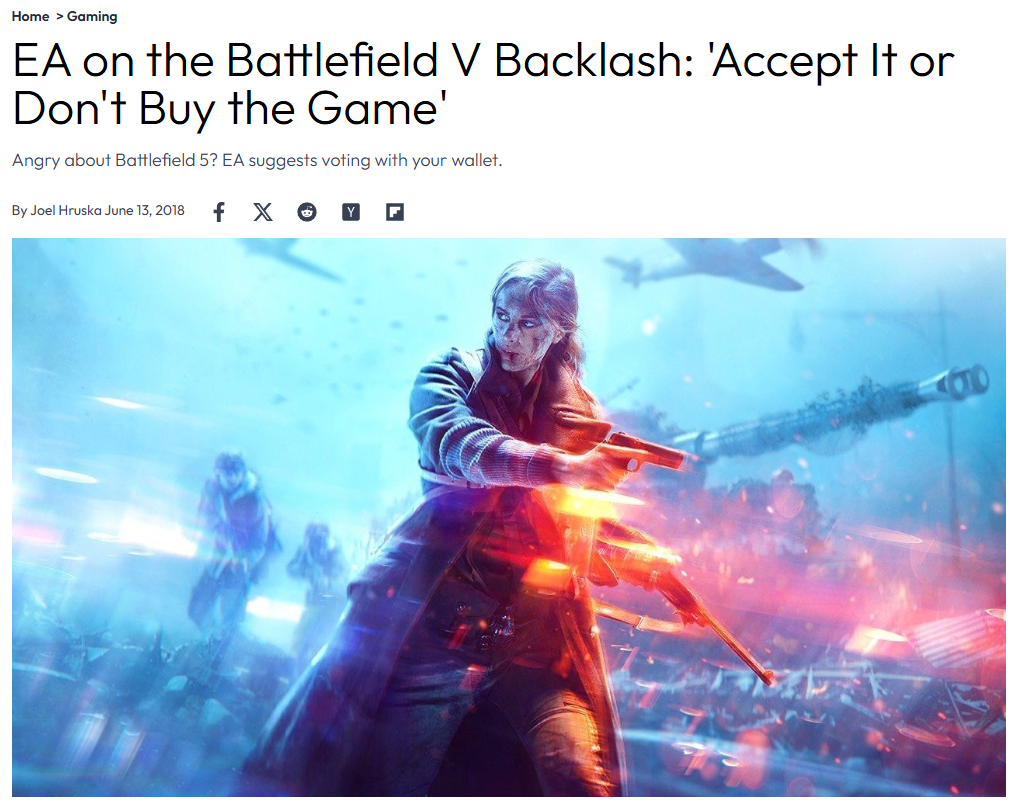
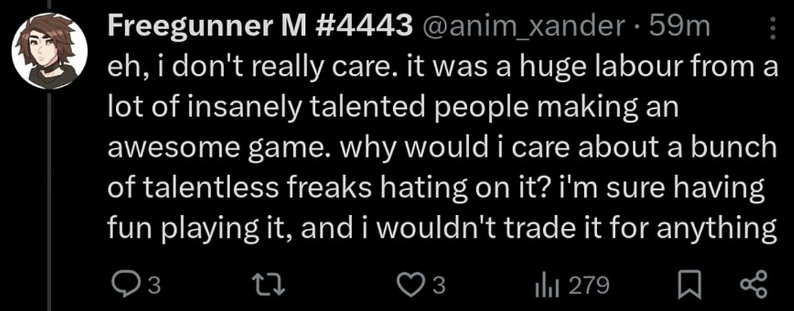
More examples of Western gaming media being full of jackasses.

Hogwarts Legacy review because of """PrObLeMaTiC eLeMeNtS"""

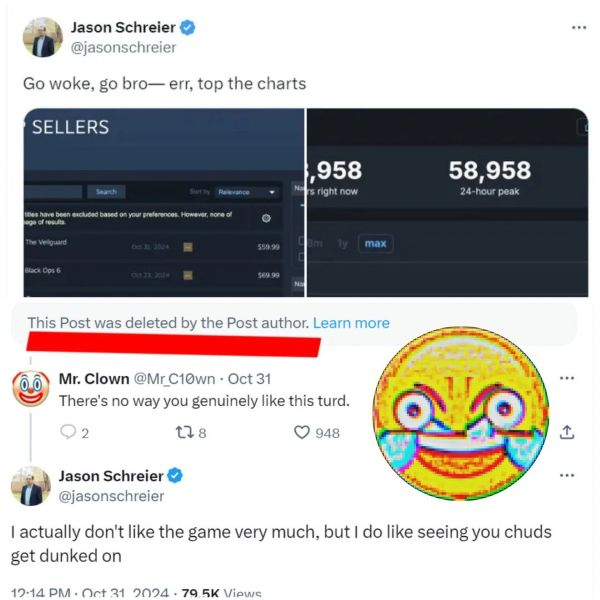
Everyone's favorite little Male Ally Lapdog Jason Schreier about both Dragon Age: Veilguard and Dragon's Crown:
lVnqTdY4koOWn24D.jpg


lrHnAdMQk1hORnts.png


The IGN France piece about Stellar Blade:
nnFbMJ4NkRLx5ne8.jpeg

Translated: "Yes, no problem, go tell that to the women who are hit, killed, denigrated, or who commit suicide because they cannot live up to the fictional standards expected by men. The problem is not the sexy design itself (except that it sucks compared to others, but hey, that doesn't matter), but the percentage of males who will only want this type of fictional body in reality. Obviously we understand that this does not shock people who think that women are objects who must obey and be beaten. This design makes us sigh and roll our eyes, and we laugh at anyone who needs it, man or woman, but that's it. The certainly clashing remark in the text (which) targets the entire creative process, not necessarily a specific designer or the game director - this is obvious to anyone who knows a little French), only has this impact because a a good portion of gamers have become too fragile due to being fed the patriarchy."
 
Last edited:
Top Bottom