Topher
Identifies as young
Asha Sharma is already making big decisions on Game Pass and the Xbox platform.
Microsoft's new Xbox chief has had a busy couple of months after promising "the return of Xbox." Asha Sharma met with publishers at the Game Developers Conference in March, and has also been on the road visiting Microsoft's own game studios and product teams in recent weeks. Sharma, who used to work in Microsoft's CoreAI division, is very much in learning mode and talking to as many people as she can before she makes strategic decisions on the future of Xbox.
Some of those decisions are about to be made very soon.
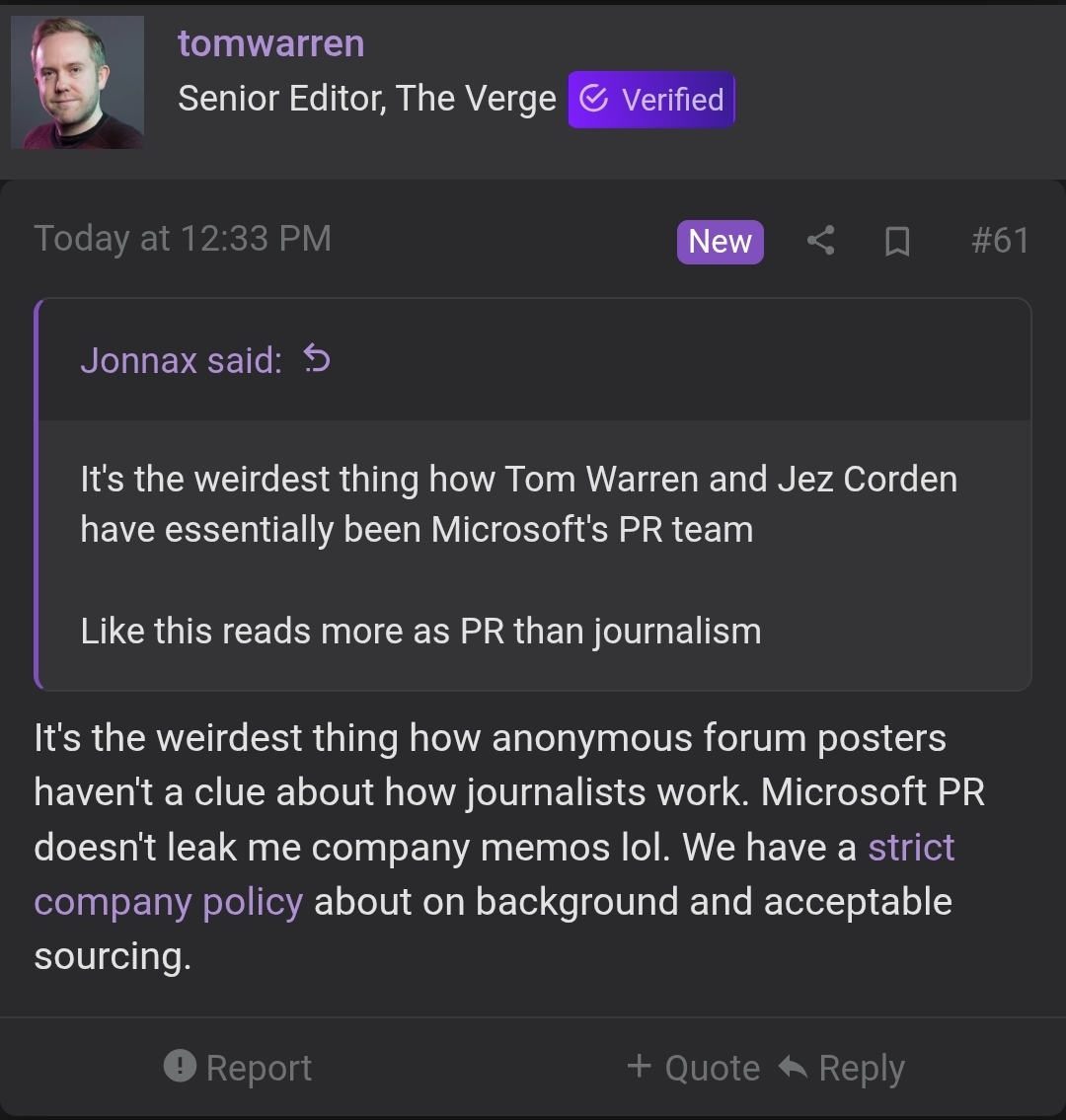
Sources at Xbox tell me Sharma has been looking closely at Game Pass pricing recently, with a view to offering a wider range of pricing models. Sharma admitted that "Game Pass has become too expensive for players," in an internal memo sent earlier this week.
"Game Pass is central to gaming value on Xbox. It's also clear that the current model isn't the final one. Player behavior, content economics, and markets vary too much for a single approach to work everywhere," said Sharma. "Short term, Game Pass has become too expensive for players, so we need a better value equation. Long term, we will evolve Game Pass into a more flexible system which will take time to test and learn around."
I understand one potential option under consideration is a Game Pass subscription tier that only includes games from Microsoft's own Xbox studios. This would fall under the more flexible system that Sharma hints at. Bundles could also help here. I reported in February that Microsoft is looking at ways to bundle third-party services with Game Pass subscriptions. Netflix co-CEO Greg Peters told The Information last month that he and Sharma had "kicked around ideas" for partnering on subscription bundles.
While new Game Pass bundles could help grow subscription numbers and revenue in the future, Sharma is also promising to address the "value equation" of Game Pass. Rumors have suggested Microsoft could remove Call of Duty from Game Pass to help with subscription costs, but it's unlikely that the company would remove existing games from subscribers. One potential option Microsoft is considering is not adding future Call of Duty titles to Game Pass. The debate over Call of Duty in Game Pass has been an intense one internally at Xbox for years, so Sharma will face a tough decision here that could expose some of the core issues of Microsoft's previous Xbox strategy.
Speaking of previous strategies, Sharma also quickly reversed Microsoft's "This is an Xbox" marketing campaign last month. I'm told the ads were deeply unpopular inside of Xbox, and outside of the company, hardcore fans hated them too. "Asha retired 'This is an Xbox' because it didn't feel like Xbox," said an unnamed Microsoft spokesperson in a statement to Windows Central. "She is personally leading a reset of how we show up as a brand."
Despite the marketing efforts and expansion to cloud and PC, how Xbox shows up as a brand is still predominantly through console hardware. In recent weeks, Sharma has switched the focus back to console. She instructed Xbox engineering teams to work on highly requested features in early March, including a cleaner Xbox guide and custom colors across the UI. This delighted fans that had been waiting years to disable Quick Resume on a per-game basis. The ability to ship these changes also delighted Xbox engineering lead Eden Marie, who posted on X in early March that "it's been a long time since I've felt this energized at work."
It's no surprise that Xbox engineers love shipping features to millions of fans who will use them immediately, instead of having to work on an Xbox mobile store that never shipped.
Sharma looks set to continue making even bigger Xbox platform investments, with the next-gen Project Helix console on the horizon. In her internal memo this week, Sharma lays out what she's learned about the Xbox platform:
The solution to these Xbox issues is a "deep" investment in engineering and data foundations, according to Sharma. I'd expect it also means a more unified Xbox UI across console, PC, and cloud. Xbox Cloud Gaming's new design already includes plenty of new animations, and Sharma also wants to accelerate "a more connected PC experience with stronger discovery, relevance, and social so players can move across games, devices, and friends without friction."
It will be interesting to see what impact Sharma has on Project Helix, Microsoft's next-gen Xbox console. The next Xbox will play PC games and "lead in performance," but it's still a mystery how Microsoft will tackle the interface for Project Helix, especially if Windows is running at the core. If Microsoft is leaning toward its Xbox PC app to help with Project Helix, then it has a lot of work ahead to match the fluidity of its existing Xbox consoles.
The Xbox Ally handhelds shipped with an Xbox PC app that felt like a beta experience. While it has improved in recent months, it still feels like it was designed with a mouse and keyboard in mind rather than a controller. Former Xbox chief Phil Spencer admitted in 2018 that Microsoft had "a ton of work to do on Windows" for PC gamers, and I'd argue that eight years later that's still the case. It's now down to Sharma to figure out the next path for Xbox on PC.
Sharma's internal memo also touches on accountability for when things go wrong at Xbox. A limited number of Xbox controllers shipped without batteries starting in December, and once Microsoft discovered the issue, it offered up a free rechargeable battery to say sorry. "The team owned it quickly. Resetting factory lines, updating retailer assortment, and standing up a support make-good with an apology all within a matter of days," says Sharma. "It's a reminder that we're in the business of earning every hour with players, and our decisions must prioritize their experience."
Microsoft's new Xbox chief has had a busy couple of months after promising "the return of Xbox." Asha Sharma met with publishers at the Game Developers Conference in March, and has also been on the road visiting Microsoft's own game studios and product teams in recent weeks. Sharma, who used to work in Microsoft's CoreAI division, is very much in learning mode and talking to as many people as she can before she makes strategic decisions on the future of Xbox.
Some of those decisions are about to be made very soon.
Sources at Xbox tell me Sharma has been looking closely at Game Pass pricing recently, with a view to offering a wider range of pricing models. Sharma admitted that "Game Pass has become too expensive for players," in an internal memo sent earlier this week.
"Game Pass is central to gaming value on Xbox. It's also clear that the current model isn't the final one. Player behavior, content economics, and markets vary too much for a single approach to work everywhere," said Sharma. "Short term, Game Pass has become too expensive for players, so we need a better value equation. Long term, we will evolve Game Pass into a more flexible system which will take time to test and learn around."
I understand one potential option under consideration is a Game Pass subscription tier that only includes games from Microsoft's own Xbox studios. This would fall under the more flexible system that Sharma hints at. Bundles could also help here. I reported in February that Microsoft is looking at ways to bundle third-party services with Game Pass subscriptions. Netflix co-CEO Greg Peters told The Information last month that he and Sharma had "kicked around ideas" for partnering on subscription bundles.
While new Game Pass bundles could help grow subscription numbers and revenue in the future, Sharma is also promising to address the "value equation" of Game Pass. Rumors have suggested Microsoft could remove Call of Duty from Game Pass to help with subscription costs, but it's unlikely that the company would remove existing games from subscribers. One potential option Microsoft is considering is not adding future Call of Duty titles to Game Pass. The debate over Call of Duty in Game Pass has been an intense one internally at Xbox for years, so Sharma will face a tough decision here that could expose some of the core issues of Microsoft's previous Xbox strategy.
Speaking of previous strategies, Sharma also quickly reversed Microsoft's "This is an Xbox" marketing campaign last month. I'm told the ads were deeply unpopular inside of Xbox, and outside of the company, hardcore fans hated them too. "Asha retired 'This is an Xbox' because it didn't feel like Xbox," said an unnamed Microsoft spokesperson in a statement to Windows Central. "She is personally leading a reset of how we show up as a brand."
Despite the marketing efforts and expansion to cloud and PC, how Xbox shows up as a brand is still predominantly through console hardware. In recent weeks, Sharma has switched the focus back to console. She instructed Xbox engineering teams to work on highly requested features in early March, including a cleaner Xbox guide and custom colors across the UI. This delighted fans that had been waiting years to disable Quick Resume on a per-game basis. The ability to ship these changes also delighted Xbox engineering lead Eden Marie, who posted on X in early March that "it's been a long time since I've felt this energized at work."
It's no surprise that Xbox engineers love shipping features to millions of fans who will use them immediately, instead of having to work on an Xbox mobile store that never shipped.
Sharma looks set to continue making even bigger Xbox platform investments, with the next-gen Project Helix console on the horizon. In her internal memo this week, Sharma lays out what she's learned about the Xbox platform:
It's clear that our ambitions require deeper investment in the Xbox platform foundations than we've made before. Today we operate across dozens of surfaces, pipelines, and release models without a shared code repository or common data foundation. As a result, quality and speed too often depends on heroics instead of systems. We also lack consistent infrastructure for experimentation, attribution, and learning, making it harder to know what's working and improve quickly. On the product side, our front end is a set of experiences built at different times, where discovery, relevance, and social are not first-class, and players have to work to find what to do next or who to play with.
The solution to these Xbox issues is a "deep" investment in engineering and data foundations, according to Sharma. I'd expect it also means a more unified Xbox UI across console, PC, and cloud. Xbox Cloud Gaming's new design already includes plenty of new animations, and Sharma also wants to accelerate "a more connected PC experience with stronger discovery, relevance, and social so players can move across games, devices, and friends without friction."
It will be interesting to see what impact Sharma has on Project Helix, Microsoft's next-gen Xbox console. The next Xbox will play PC games and "lead in performance," but it's still a mystery how Microsoft will tackle the interface for Project Helix, especially if Windows is running at the core. If Microsoft is leaning toward its Xbox PC app to help with Project Helix, then it has a lot of work ahead to match the fluidity of its existing Xbox consoles.
The Xbox Ally handhelds shipped with an Xbox PC app that felt like a beta experience. While it has improved in recent months, it still feels like it was designed with a mouse and keyboard in mind rather than a controller. Former Xbox chief Phil Spencer admitted in 2018 that Microsoft had "a ton of work to do on Windows" for PC gamers, and I'd argue that eight years later that's still the case. It's now down to Sharma to figure out the next path for Xbox on PC.
Sharma's internal memo also touches on accountability for when things go wrong at Xbox. A limited number of Xbox controllers shipped without batteries starting in December, and once Microsoft discovered the issue, it offered up a free rechargeable battery to say sorry. "The team owned it quickly. Resetting factory lines, updating retailer assortment, and standing up a support make-good with an apology all within a matter of days," says Sharma. "It's a reminder that we're in the business of earning every hour with players, and our decisions must prioritize their experience."